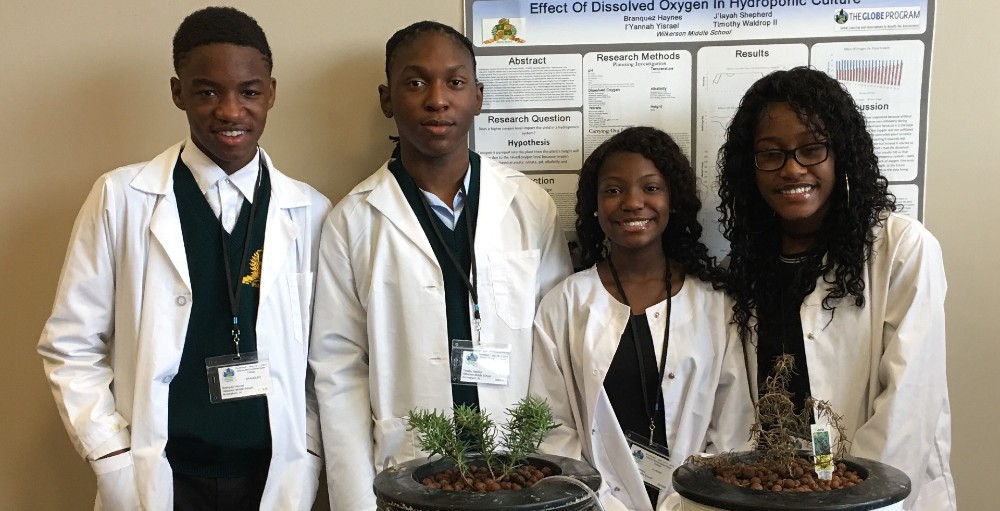
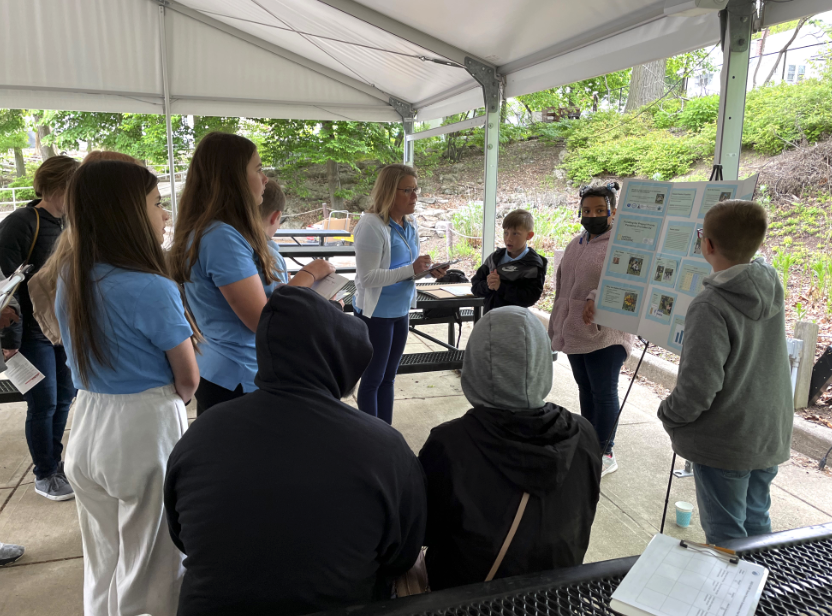
Students in fifth to 12th grades can share the results of their hard work in GLOBE research investigations at a GLOBE Student Research Symposium. The symposia offer the chance to discuss research projects with science, technology, engineering and mathematics (STEM) professionals, share ideas and learn from peers, and explore STEM careers. Symposia are held every spring in each of GLOBE's six U.S. regions.
GLOBE alumni, International Science Network members and other national program collaborators are also warmly invited to join their regional symposia.
New Resources
The GLOBE U.S. Coordination Office has developed two guidance documents in support of educators and students submitting projects for the 2023 U.S. Regional Student Research Symposia. These are drafts and works in progress that will be updated as we receive additional feedback from the GLOBE community.
If your students use ChatGPT, or a similar generative AI tool, to help them write any portion of their SRS poster, we ask that they cite the tool (PDF).
Watch this 2 minute video to learn how the GLOBE SRS differs from a science fair.
Funding and Registration
A Student Research Symposia team consists of oneeducator and up to four students. All projects must include data collected with GLOBE protocols or from the GLOBE database. To register a team:
Sign a media release form and complete a registration form (per participant).
Optional: Apply for travel/lodging funding support through a Funding Application.
"[The scientific process] doesn't seem scary or impossible anymore."
“The [Student Research Symposia] made me realize that science is fun, and there is so much to do within the science field.”
"[The Student Research Symposia] prepared me for my potential career in science and it prepared me for college"
“[The Student Research Symposia] is a friendly atmosphere and most definitely welcoming.”
“It is good to learn from other students that we don't already know and just meet and talk to people of different backgrounds.”
Educators
“This was a once in a lifetime experience for my students and I am very grateful for this support. They have returned to school very proud of their accomplishment of participating.”
“[Student Research Symposia] encouraged the concept of sharing research information. It was beneficial for the students to understand that the symposium was not a competition, but an opportunity to share, revise, learn, and apply new ideas.”
“The students realize that they can contribute to the scientific community and that their research is important. They feel part of ‘Science.’”
Acknowledgement: This material is based upon work supported by NASA (Grant no. 80NSSC18K0135) and Youth Learning As Citizen Environmental Scientists. Any opinion, findings and conclusions or recommendations expressed in this material are those of the authors(s) and do not necessarily reflect the views of NASA or Youth Learning As Citizen Environmental Scientists.